
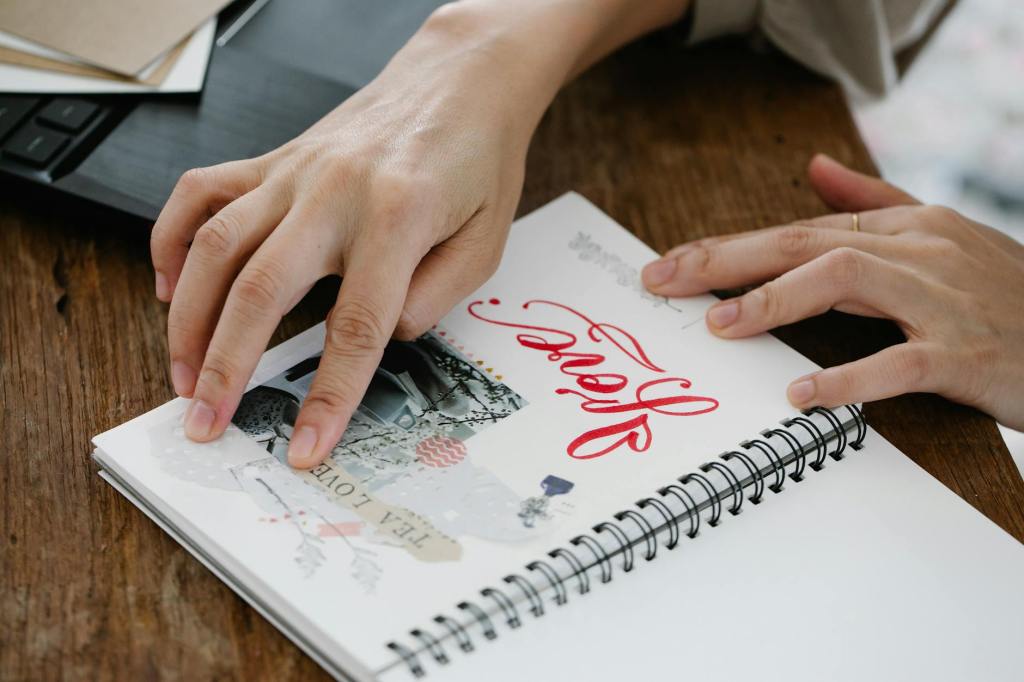
It’s funny how the things we love most can start to feel like chores when life piles up. Between busy days at the clinic, coaching with the swim team, and the ongoing adventure of renovating our old house (Knerten has a way of keeping us humble!), I’ve found my usual hobbies quietly slipping off the radar. Even my training shoes have sat untouched for a few weeks now — a sure sign that something’s shifted. Maybe it’s the darker winter days creeping in, or the endless list of life’s little tasks (like trying to find a new car before winter), but the motivation that usually drives me to do has been in hiding lately.
And if you’re nodding along — you’re not alone.
Most of us turn to hobbies because they bring us joy. They’re supposed to be our little escapes, the things that lift us out of the everyday routine. But what happens when your favourite hobby suddenly feels… heavy? When your craft supplies, running shoes, or book pile no longer spark the same excitement?
If you’ve been there — you’re not alone. Losing motivation or joy in your hobbies is far more common than we like to admit. The good news? It doesn’t mean you’ve “failed” at your hobby, or that the love is gone forever. Often, it’s just a sign that something needs to shift.
Why Does It Happen?
Motivation naturally ebbs and flows, and hobbies are no exception. In fact, research shows that leisure burnout—the feeling of emotional exhaustion or reduced enjoyment even in free-time activities—is surprisingly common during stressful periods (Cho et al., 2020). When our energy is consumed by work, family, or ongoing stressors, the brain has fewer resources left for creativity and play (Sonnentag & Fritz, 2015).
A few common reasons include:

Burnout – Doing too much, too quickly, or putting pressure on yourself to “finish.”
Stress – Chronic stress elevates cortisol and can blunt reward sensitivity, meaning the things that used to feel fun may no longer trigger the same dopamine response (Bianchi et al., 2015).
Comparison – Scrolling through picture-perfect projects online can create performance anxiety rather than enjoyment.
Routine fatigue – Even fun things can feel stale if you do them the same way every time.
Sometimes, the brain simply needs novelty, or a little time to rest and reset. Research on recovery from stress suggests that psychological detachment—mentally switching off from obligations—is key to replenishing energy and preventing burnout (Sonnentag et al., 2017).
Gentle Ways to Find Joy Again
Here are a few simple, low-pressure ways to reawaken your interest:
Take a break without guilt. Stepping away often reignites curiosity naturally. Think of it as giving your hobby a nap. Intentional rest has been shown to improve long-term engagement and creativity (Huta, 2016).
Make it smaller. If the idea of a big project feels overwhelming, scale down. Instead of a full scrapbook, make a single memory card. Instead of knitting a full jumper, start with a coaster. Small wins help rebuild intrinsic motivation (Deci & Ryan, 2012).
Mix in inspiration. Watch a YouTube tutorial, flip through a magazine, or walk through a craft shop. Novelty exposure can stimulate the brain’s reward system and rekindle interest.
Pair it with something else you love. Listen to a podcast, music, or an audiobook while creating — this can make the process feel lighter and more playful.
Drop the pressure. Let go of the need for perfection. Studies show that engaging in creative hobbies for enjoyment—not achievement—significantly boosts mood and lowers physiological stress (Conner et al., 2018).
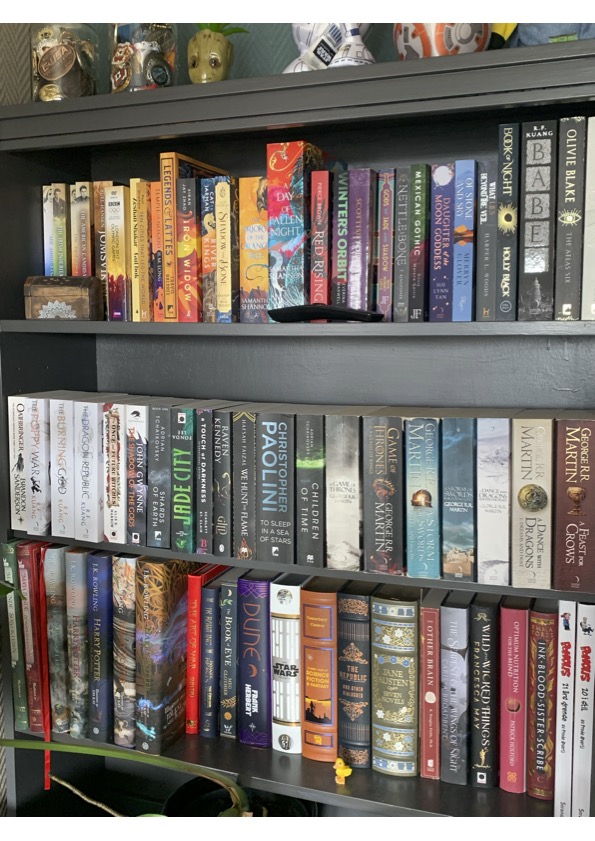
When It’s Time to Pivot
Sometimes, the lack of joy is your mind’s way of nudging you towards something new. That doesn’t mean your old hobby is gone forever — just that right now, you might need a different outlet. Trying something new (painting instead of photography, cooking instead of gardening) can refresh your perspective and even make you fall back in love with your original hobby later.
Psychologists refer to this as recovery through mastery experiences—activities that challenge us just enough to feel competent and in control, which restores mental energy (Newman et al., 2014).
Curiously Aligned Take
If your creative spark has dimmed lately, trust that it’s not gone — just resting. I’ve been reminding myself that it’s okay to take a step back, to let hobbies hibernate while life takes centre stage. Some evenings, I find myself sketching renovation plans for Knerten or taking a longer walk to the car after clinic hours instead of a proper workout — and that’s enough.
Hobbies should give energy, not drain it. If yours feels like a chore, take it as a gentle signal to pause, simplify, or switch things up. And remember: it’s absolutely okay if your motivation flickers from time to time. That’s just how life flows.
So if your knitting needles, paintbrushes, or hiking boots are gathering dust — don’t worry. They’ll be waiting when you’re ready. Until then, be kind to yourself, follow your curiosity, and let your joy return naturally.
👉 How about you? What do you do when your hobbies stop feeling fun?
References
- Bianchi, R., Schonfeld, I. S., & Laurent, E. (2015). Burnout-depression overlap: A review. Clinical Psychology Review, 36, 28–41.
- Cho, S., Lee, S., & Kim, K. (2020). Leisure burnout and psychological well-being among adults: The mediating role of leisure satisfaction. International Journal of Environmental Research and Public Health, 17(21), 8092.
- Conner, T. S., DeYoung, C. G., & Silvia, P. J. (2018). Everyday creative activity as a path to flourishing. The Journal of Positive Psychology, 13(2), 181–189.
- Deci, E. L., & Ryan, R. M. (2012). Self-determination theory. In Van Lange, P. A. M., Kruglanski, A. W., & Higgins, E. T. (Eds.), Handbook of theories of social psychology (Vol. 1, pp. 416–437). Sage.
- Huta, V. (2016). Eudaimonic and hedonic orientations: Theoretical considerations and research findings. In Vittersø, J. (Ed.), Handbook of eudaimonic well-being (pp. 215–231). Springer.
- Newman, D. B., Tay, L., & Diener, E. (2014). Leisure and subjective well-being: A model of psychological mechanisms as mediating factors. Journal of Happiness Studies, 15(3), 555–578.
- Sonnentag, S., & Fritz, C. (2015). Recovery from job stress: The stressor-detachment model as an integrative framework. Journal of Organizational Behavior, 36(S1), S72–S103.
- Sonnentag, S., Venz, L., & Casper, A. (2017). Advances in recovery research: What have we learned? What should be done next? Journal of Occupational Health Psychology, 22(3), 365–380.


 Curiously AligneD
Leave a comment