

Hogmanay has always struck me as a beautifully defiant celebration. Winter is deep, the nights are long, the weather is doing whatever it pleases, and yet here we are—lighting fires, clinking glasses, stepping over thresholds, and insisting on joy. It feels fitting, then, that tonight’s post is about awe: that quiet, expansive emotion that sneaks in through the cracks and reminds us the world is larger than our worries.
Awe doesn’t shout. It doesn’t demand productivity or positivity. It simply opens a window.
And in winter—when the blues can creep in uninvited—that window matters.

What Awe Actually Is (and Why It Feels So Big)
Psychologically speaking, awe is what happens when we encounter something vast that challenges our usual way of understanding the world. Vast doesn’t have to mean huge in size. It can be emotional, conceptual, natural, or even social. A night sky thick with stars. A piece of music that rearranges your insides. Watching someone do something deeply kind when no one is watching.
Awe gently dislodges the ego. Your problems don’t vanish—but they shrink, just enough to breathe again.
Neuroscience backs this up. Experiences of awe are associated with reduced activity in the brain’s default mode network—the circuitry involved in self-focus and rumination. In plain terms: awe gives the overthinking part of your brain a cup of tea and tells it to sit down for a minute.
That alone makes it winter medicine.
Awe as an Antidote to the Winter Blues
Winter has a habit of narrowing life. Less light. Fewer spontaneous plans. More indoor time with our own thoughts. The blues often arrive not because something is wrong, but because everything feels smaller and more repetitive.
Awe does the opposite.
Research shows that experiencing awe is linked with:
- Improved mood and emotional resilience
- Reduced stress and inflammatory markers
- Increased feelings of connection and meaning
- Greater generosity and pro-social behaviour
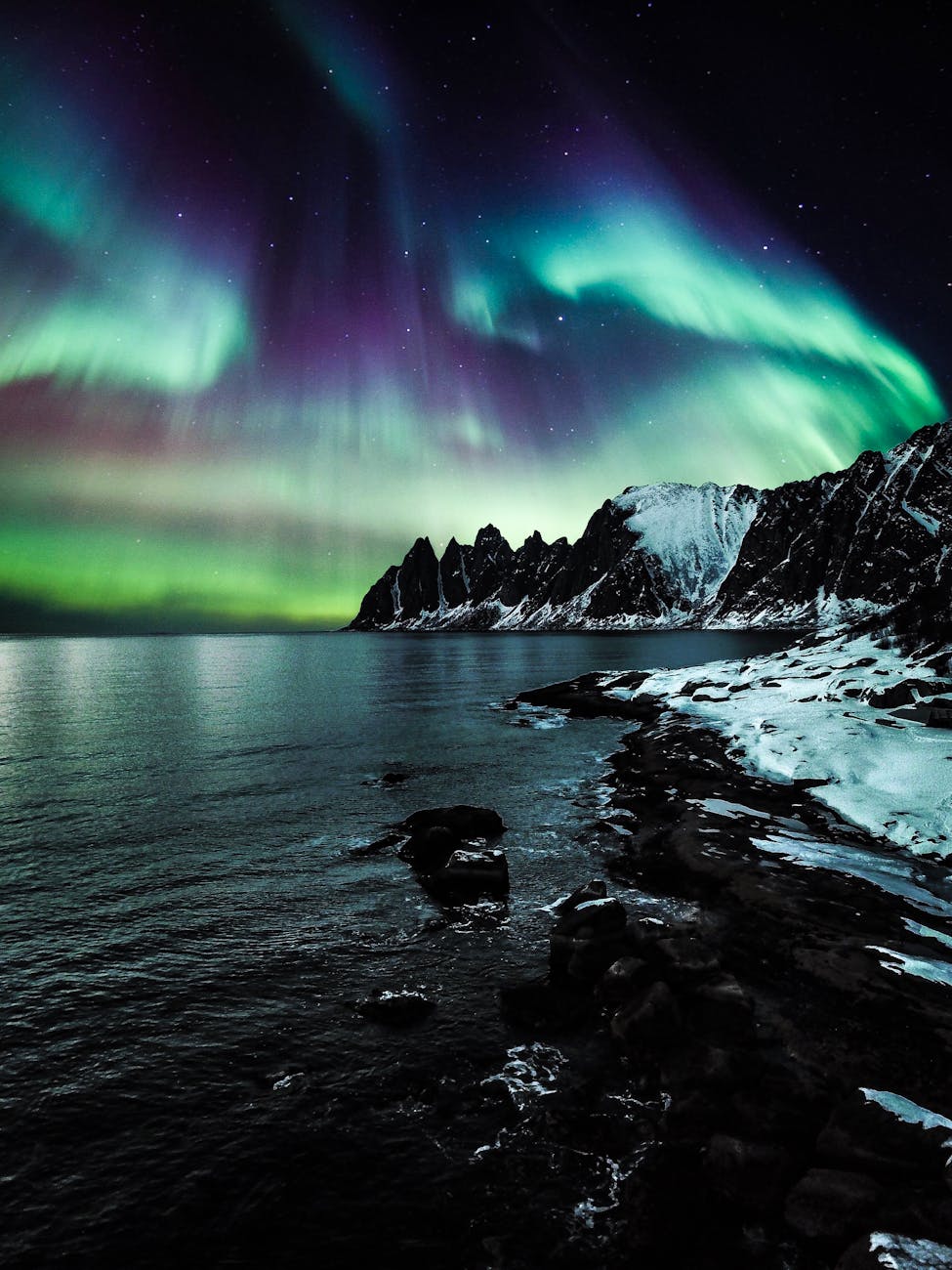
It’s hard to stay locked in self-criticism when you’re staring at the northern lights, or listening to a crowd sing together, or watching waves hammer a winter shoreline with complete indifference to your inbox.
Awe widens the frame.

Hogmanay:
Awe, But Make It Communal
This is where Hogmanay slips neatly into the conversation.
At its heart, Hogmanay is an awe-rich ritual. Fire festivals cutting through the dark. Mass gatherings where strangers become momentary companions. The strange, electric feeling of standing at the edge of a year, knowing everyone else is doing the same thing at the same time.
There’s something profoundly regulating about shared awe. Studies suggest that awe experienced collectively amplifies social bonding and reduces feelings of isolation. Which may explain why standing in the cold with thousands of people somehow feels warmer than staying home alone under a blanket.
Hogmanay doesn’t ask us to resolve the past year or plan the next one perfectly. It simply asks us to witness—the turning of time, the persistence of light, the fact that we made it here together.
What Happens in the Brain When We Feel Awe
When awe shows up, several helpful things happen under the hood:
Stress hormones like cortisol tend to decrease, while the parasympathetic nervous system—the “rest and restore” branch—gets a nudge. At the same time, dopamine and oxytocin often rise, reinforcing feelings of curiosity, pleasure, and connection.
There’s also evidence that awe increases what psychologists call “time abundance.” In other words, time feels less scarce. Winter often compresses time into deadlines and darkness. Awe stretches it back out again.
It doesn’t fix everything. But it changes the terrain.
Practicing Awe (No Fire Festival Required)
One of the most useful things about awe is that it’s surprisingly accessible. You don’t need fireworks or bagpipes—though they help.
Awe can be cultivated by:
- Spending time in nature, especially in quiet or vast environments
- Seeking out art, music, or stories that challenge perspective
- Paying attention to moments of human kindness or skill
- Looking up—literally—at night skies, snowfall, or winter storms
- Marking transitions with intention, as Hogmanay so elegantly does
The trick is not to chase awe, but to leave room for it. Put the phone down. Let yourself be interrupted by beauty.
Why Awe Belongs at New Year
New Year’s resolutions tend to focus on control: goals, habits, optimisation. Awe offers something different. It reminds us that not everything meaningful is measurable, and not everything healing is effortful.
As the year turns tonight, Hogmanay gives us permission to stand in wonder rather than judgement. To feel small in a way that’s comforting. To remember that winter is not just something to endure, but something that can still astonish us.
Awe doesn’t promise a better year.
It promises a wider one.
Curiously Aligned Take:
Winter narrows our world; awe expands it again. Whether it arrives through firelight, frost, music, or shared celebration, awe reminds the nervous system that life is bigger than fatigue and brighter than the dark suggests. Hogmanay isn’t just a party—it’s a collective moment of perspective, and perspective, it turns out, is powerful medicine.
References
- Keltner, D., & Haidt, J. (2003). Approaching awe, a moral, spiritual, and aesthetic emotion. Cognition and Emotion, 17(2), 297–314.
- Stellar, J. E., et al. (2015). Positive affect and markers of inflammation: Discrete positive emotions predict lower levels of inflammatory cytokines. Emotion, 15(2), 129–133.
- Piff, P. K., et al. (2015). Awe, the small self, and prosocial behavior. Journal of Personality and Social Psychology, 108(6), 883–899.
- Rudd, M., Vohs, K. D., & Aaker, J. (2012). Awe expands people’s perception of time, alters decision making, and enhances well-being. Psychological Science, 23(10), 1130–1136.
- Bai, Y., et al. (2021). Awe, daily stress, and elevated life satisfaction. Journal of Personality and Social Psychology, 120(4), 837–860.


 Curiously AligneD
Leave a comment