
I have always loved watching rugby — perhaps because it’s the perfect cocktail of grit and strategy. During my university days in Wales, I worked pitch-side as the pitch side first aider for a local rugby team. It was an eye-opening experience: from last-minute taping jobs to sideline concussion checks and post-match injury management, I had to learn quickly how to keep athletes in fighting form. Rugby league and union were both part of the weekend rotation, and for someone from a background in non-contact sport, it was certainly a crash course in acute care, prehab, and rehab on the fly.
Fast forward to this weekend — I found myself in the stands again, this time watching Norway take on the Czech Republic. The home team absolutely thrashed their competition (a pleasant change from the nail-biting tension of watching Scotland play Union rugby!). Sitting there, I was reminded just how physically and mentally demanding rugby really is — and how much smart rehab and chiropractic care can contribute to keeping players on the pitch.
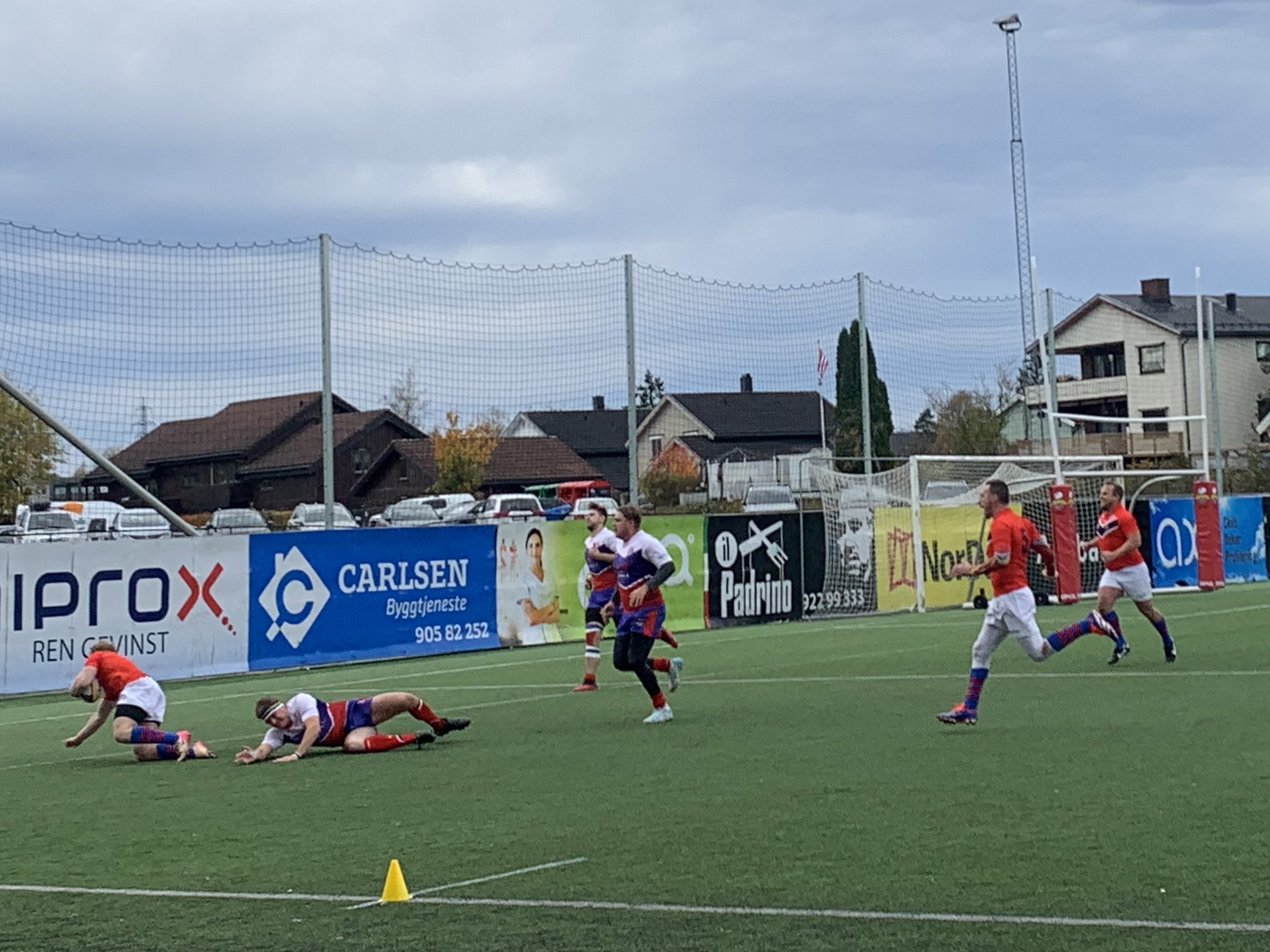
Rugby League vs. Rugby Union:
A Tale of Two Codes
Rugby, in its many forms, is a full-contact team sport involving high-intensity bursts of sprinting, tackling, passing, and tactical play. But rugby league and rugby union aren’t identical twins — more like spirited cousins.
Here’s the quick breakdown:
- Rugby League: 13 players per side (instead of 15), a “six-tackle” rule, and no contested rucks or mauls. After each tackle, play restarts with a “play-the-ball” rather than a scrum.
- Rugby Union: 15 players, frequent contests for possession (rucks, mauls, lineouts), and a slightly slower, more tactical rhythm.
- Key difference: League tends to be faster, more explosive, and collision-dense, while Union is more endurance-based and strategic.
From a therapist’s point of view, those differences matter — because they shape the type and frequency of injuries we see.
The Benefits of Playing Rugby League
While it’s definitely a sport that leaves a few bruises, the benefits of playing rugby league are immense — physically, psychologically, and socially.
1. All-Round Fitness
Rugby league players repeatedly switch between sprinting, tackling, jogging, and sudden acceleration — an ideal recipe for improving both aerobic and anaerobic capacity (Dobbin et al., 2019, J Strength Cond Res). Expect strong hearts, powerful lungs, and plenty of endurance.
2. Strength, Power, and Bone Density
The collisions and tackles in rugby stimulate significant musculoskeletal adaptation, leading to improvements in lean mass and bone strength (Gabbett, 2016). It’s essentially a full-body resistance workout at high speed.
3. Coordination and Proprioception
Balance and body awareness are vital when sidestepping opponents or absorbing a tackle. Rugby enhances proprioception and neuromuscular control — key for injury prevention (Hislop et al., 2017).
4. Psychological Benefits
Team sports have a proven positive impact on mental wellbeing, promoting resilience, social bonding, and confidence (Eime et al., 2013, Int J Behav Nutr Phys Act).

Common Injuries in Rugby League
(and What to Do About Them)
The high-impact nature of rugby league means injuries are, unfortunately, part of the game. Most occur during tackles or rapid direction changes. Below are the usual suspects and how they’re typically managed:
| Injury Type | Mechanism of Injury | Treatment Protocol |
| Quadriceps & Hamstring Strains / Contusions | Direct impact or over-stretching | RICE/PRICE protocol, gradual loading, soft-tissue therapy, and graded strengthening. |
| Knee Ligament Injuries (MCL/ACL) | Twisting or valgus stress | Bracing, neuromuscular rehab, or surgical reconstruction for severe cases. |
| Shoulder Dislocations / AC Joint Sprains | Impact on outstretched arm | Immobilisation, manual therapy, rotator cuff and scapular stabilisation exercises |
| Concussion | Head collision | Immediate removal from play, medical evaluation, graded return under supervision. |
| Fractures / Dislocations | High-energy collisions | Immobilisation, imaging, surgical repair if needed, then progressive rehab. |
Injury data from the professional leagues show that lower limb injuries (especially the knee) are the most frequent, while shoulder and concussion-related issues remain high (King et al., 2022, Sports Med Open). The tackle alone accounts for over 50% of all recorded injuries.
How Chiropractic Fits Into the Picture
Now, not every rugby injury is a candidate for chiropractic care — no one’s adjusting an acute ACL rupture or a broken clavicle. But for functional recovery, pain management, and injury prevention, chiropractic can play a meaningful role within a multidisciplinary framework.
Spinal and Joint Mobility
Regular spinal and extremity adjustments can help maintain optimal joint function, reduce stiffness, and improve neuromuscular coordination — crucial for athletes performing repetitive high-load movements (Miners & Degraauw, 2020).
Soft-Tissue Techniques
Manual release work (trigger-point therapy, myofascial techniques) can ease post-training soreness, enhance circulation, and support tissue healing between matches.
Biomechanical Screening
Chiropractors trained in sports performance can identify movement asymmetries — pelvic rotation, restricted thoracic mobility, or scapular dyskinesis — before they snowball into overuse injuries.
Recovery and Load Management
Maintenance sessions during the season help mitigate microtrauma from weekly collisions and restore range of motion before the next round of fixtures.
Research suggests that chiropractic care, when integrated into sports medicine teams, can improve recovery time and movement efficiency in athletes (Holt et al., 2021, J Can Chiropr Assoc). The best outcomes occur when chiropractors, physiotherapists, and trainers work collaboratively — each addressing their piece of the puzzle.

Prehab: Staying in the Game Before Things Go Wrong
Prehab (pre-habilitation) is about bulletproofing the body before an injury happens. For rugby league players, that means building resilience against impact, fatigue, and mechanical overload.
A good prehab plan includes:
- Functional Movement Screening – to catch asymmetries or weak links.
- Mobility and Activation Work – especially for hips, shoulders, and thoracic spine.
- Strength and Stability Training – focusing on eccentric control, balance, and dynamic loading.
- Soft-Tissue and Chiropractic Maintenance – to keep joints free, muscles supple, and the nervous system firing efficiently.
- Recovery Rituals – adequate sleep, hydration, and proper nutrition (yes, even rugby players need their greens).
By weaving chiropractic care into this prehab routine, athletes can enhance their movement quality, reduce soft-tissue restriction, and stay match-ready for longer stretches of the season.
Final Whistle
Rugby league may be fast, fierce, and full-contact — but it’s also full of lessons in teamwork, discipline, and body awareness. Whether you’re on the pitch or in the treatment room, the goal is the same: to keep players moving well, recovering faster, and enjoying the sport they love for as long as possible.
After all, it’s much better to stay in alignment than to find yourself out of action.
References
- Dobbin, N., et al. (2019). Physiological demands of rugby league match play. Journal of Strength and Conditioning Research, 33(12), 3374–3382.
- Gabbett, T. (2016). The training–injury prevention paradox: Should athletes be training smarter and harder? British Journal of Sports Medicine, 50(5), 273–280.
- Hislop, M., et al. (2017). The effectiveness of neuromuscular training for injury prevention in team sports. Sports Medicine, 47(12), 2496–2511.
- King, D. A., et al. (2022). Match and training injuries in rugby league: A systematic review. Sports Medicine Open, 8(1), 47.
- Eime, R. M., et al. (2013). The health benefits of participation in sport for adults: A systematic review. International Journal of Behavioral Nutrition and Physical Activity, 10(1), 135.
- Miners, A. L., & Degraauw, C. (2020). Chiropractic care and athletic performance: A narrative review. Journal of the Canadian Chiropractic Association, 64(3), 211–221.
- Holt, K. R., et al. (2021). Chiropractic treatment in sports: A systematic review of randomized controlled trials. JCCA, 65(4), 276–289.


 Curiously AligneD
Leave a comment