
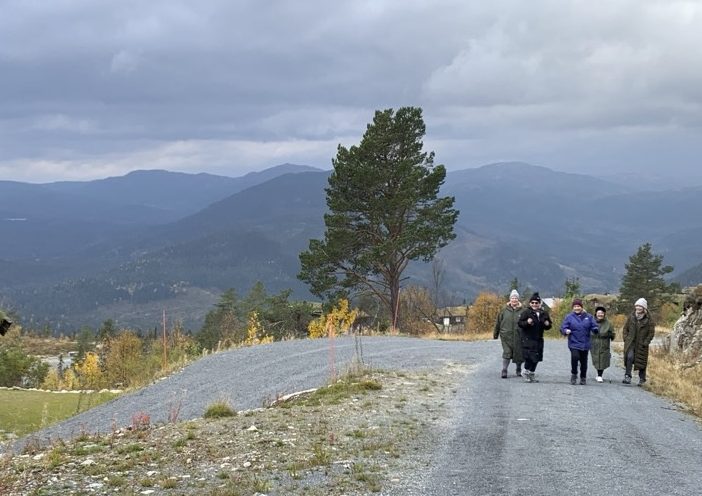
This weekend I traded clinic walls for pine-scented air and birdsong, joining my mum and her choir friends at the cabin hidden amongst the mountains in Norways Telemark region. Between cups of tea, laughter, and impromptu bursts of song, we laced up our boots and headed out on the trails. And as my calves reminded me on the uphill climbs, hiking is more than a scenic pastime — it’s a full-body (and mind) workout.
But beyond the rosy cheeks and sore quads, what does the science say about hiking? Let’s take a look at how putting one foot in front of the other on a woodland trail can make you healthier, happier, and maybe even a bit smarter.

Hiking and Physical Fitness
Hiking is essentially resistance training disguised as fun. Uneven terrain recruits stabilising muscles that flat treadmill walks simply can’t. Uphill sections strengthen glutes and calves, while descents challenge eccentric control in the quads — a natural lower-limb workout (Saunders et al., 2016). Regular hiking has been shown to improve cardiovascular endurance, reduce blood pressure, and enhance lipid profiles (Oja et al., 2015).
Even short bouts matter. One study found that brisk walking in natural environments reduced cardiovascular risk markers significantly, with benefits comparable to more structured exercise programs (Thompson Coon et al., 2011). Translation: that Sunday stroll with mum counts as legitimate training!
Hiking and Mental Health
The choir may have had Mozart on their minds, but nature provides its own symphony for the brain. Exposure to green spaces has been linked to reduced symptoms of anxiety and depression (Bratman et al., 2019). Hiking, specifically, seems to enhance mood and lower rumination — that sticky cycle of negative thought loops — compared to walking in urban environments (Bratman et al., 2015).
In fact, research suggests that nature-based physical activity improves not just mood, but also cognitive function and working memory (Berman et al., 2008). So if you’ve ever returned from a hike with a “clear head,” that’s your prefrontal cortex quietly thanking you.
Hiking as Social Therapy

I’d argue my mum’s choir friends didn’t need another reason to sing, but shared activity strengthens social bonds. Hiking in groups fosters connection and belonging, which buffer against stress and loneliness (Pretty et al., 2007). Group exercise has also been shown to boost adherence and motivation compared to going solo (Burke et al., 2006).
So while the science talks “social cohesion,” what I witnessed was a group of friends laughing, harmonising, and marching up a hill together. Therapy in hiking boots, if you will.
Hiking and Stress Regulation
Forest trails don’t just test your legs — they soothe your nervous system. “Forest bathing” (shinrin-yoku) studies have shown reductions in cortisol, heart rate, and sympathetic nervous activity after time in wooded environments (Park et al., 2010). Hiking in nature helps tilt the autonomic balance towards parasympathetic (“rest and digest”) dominance.
Which explains why, even after my mum’s group sang loudly enough to scare off local wildlife, we all returned to the cabin feeling more relaxed and grounded.
Practical Tips for the Trail
- Start small: Even a 30-minute woodland walk can deliver benefits.
- Mind your joints: Use poles for downhill sections if you’re prone to knee pain.
- Layer up: Weather changes fast in the hills (yes, I learned this the soggy way).
- Bring friends: For motivation, laughter, and possibly a woodland choir.
Curiously Aligned Take
Hiking isn’t just about reaching the summit; it’s about what happens along the way. Stronger muscles, calmer minds, closer connections — the science says yes, and so does my weekend at the cabin. So go on: lace up, step out, and remember that each trail offers not just a view, but a little therapy too.
References
- Berman, M. G., Jonides, J., & Kaplan, S. (2008). The cognitive benefits of interacting with nature. Psychological Science, 19(12), 1207–1212.
- Bratman, G. N., Hamilton, J. P., Hahn, K. S., Daily, G. C., & Gross, J. J. (2015). Nature experience reduces rumination and subgenual prefrontal cortex activation. Proceedings of the National Academy of Sciences, 112(28), 8567–8572.
- Bratman, G. N., et al. (2019). Nature and mental health: An ecosystem service perspective. Science Advances, 5(7), eaax0903.
- Burke, S. M., Carron, A. V., Eys, M. A., Ntoumanis, N., & Estabrooks, P. A. (2006). Group versus individual approach? A meta-analysis of the effectiveness of interventions to promote physical activity. Sport and Exercise Psychology Review, 2(1), 19–35.
- Oja, P., et al. (2015). Health benefits of different sport disciplines for adults: systematic review of observational and intervention studies with meta-analysis. British Journal of Sports Medicine, 49(7), 434–440.
- Park, B. J., et al. (2010). The physiological effects of Shinrin-yoku (taking in the forest atmosphere or forest bathing): Evidence from field experiments in 24 forests across Japan. Environmental Health and Preventive Medicine, 15(1), 18–26.
- Pretty, J., Peacock, J., Sellens, M., & Griffin, M. (2007). The mental and physical health outcomes of green exercise. International Journal of Environmental Health Research, 15(5), 319–337.
- Saunders, P. U., Pyne, D. B., & Gore, C. J. (2016). Endurance training for health and performance: Advancing the paradigm. Physiology, 31(6), 427–438.
- Thompson Coon, J., et al. (2011). Does participating in physical activity in outdoor natural environments have a greater effect on physical and mental wellbeing than physical activity indoors? Environmental Science & Technology, 45(5), 1761–1772.


 Curiously AligneD
Leave a comment