
Life gets busy. Between working at the clinic, coaching in the evenings and training for races, alongside trying to keep up with everyday demands, it’s easy to let stress pile up.
For me, one of the most surprising ways I’ve learned to unwind isn’t just through a workout or a yoga session, but through something much more low-key: scrapbooking.
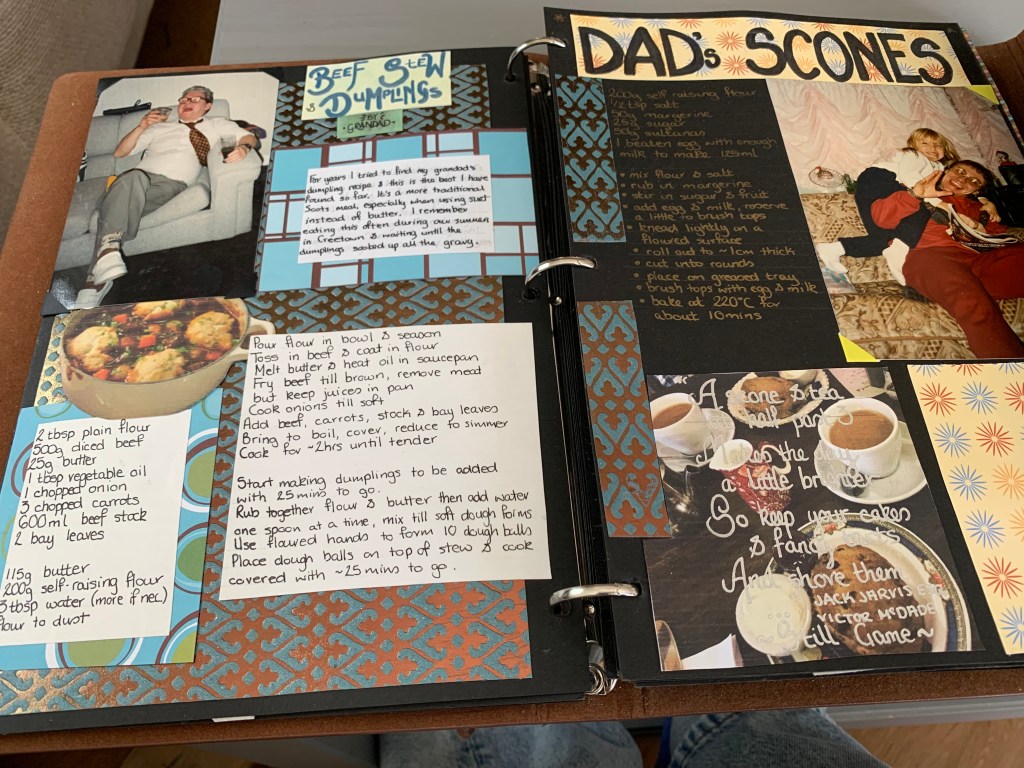
In the last few years I have taken to preserving some old family photos alongside nostalgic recipes, a practice that not only helps to alleviate the longing for home but also gives me a gentle way to pause in the middle of a busy week. Sorting through memories, colours, and textures feels almost like a small ritual that connects past and present. It’s in these quiet, creative moments that I find myself able to step back, slow down, and begin the process of switching off from the daily rush.
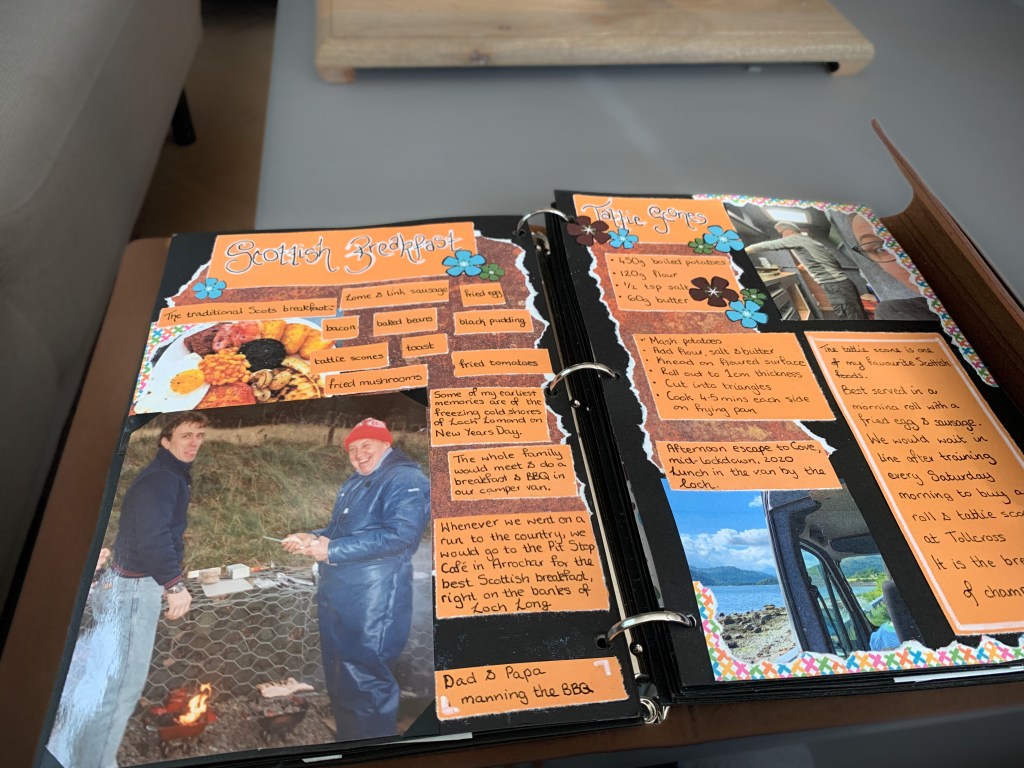
Scrapbooking gives me space to slow down, switch off my “work brain,” and just create. There’s something grounding about cutting, gluing, arranging photos, and adding little notes — it’s both mindful and fun. It doesn’t require a perfect end product (my pages are far from Pinterest-ready!), but the process itself feels calming.
And it’s not just personal feeling — research actually backs this up. Studies show that creative hobbies like journaling, painting, or crafting can:
- Lower cortisol, the body’s main stress hormone. For example, a study by Kaimal et al. (2016) found that just 45 minutes of visual art making significantly reduced cortisol levels in healthy adults.
- Reduce perceived stress. A recent art-making intervention over four weeks with college students saw measurable drops in stress levels.
- Improve mood, sense of well-being, and self‐esteem. Studies of crafting and creative arts more broadly show that people who engage in these kinds of hobbies report higher positive affect and a sense of flourishing.
I think of it as a little reminder that hobbies aren’t “wasted time.” They’re a form of self-care that feeds creativity, reduces stress, and helps keep life in balance. For me, flipping back through my scrapbook pages is also a way of remembering good moments — a mini gratitude practice hidden between paper and glue.
So if you’ve been looking for a way to de-stress that doesn’t involve screens or sweat, maybe give scrapbooking (or another creative hobby) a try. You don’t need to be “artistic” — you just need a stack of memories and a willingness to play.
References
- Kaimal G, et al. Reduction of Cortisol Levels and Participants’ Responses after Visual Art Making (2016). A quasi-experimental study showing that 45 minutes of visual art can significantly lower cortisol in healthy adults. PMC+1
- Liu C, et al. Assessing the Stress-Relief Impact of an Art-Based Intervention (2024). Four-week art-making amongst college students led to significant reductions in perceived stress. PMC
- Keyes H, et al. Creating arts and crafting positively predicts subjective well-being (2024). Engagement with crafting and creative arts correlated with improved wellbeing in adults. PMC
- “How Hobbies Improve Mental Health” – Extension & Utah State University. Overview of how creative and physical hobbies improve mood, reduce anxiety, and bolster wellbeing.


 Curiously AligneD
Leave a comment